One Shirt, Whole Vibe: The Case for Owning a Perfect White Tee

Photo: Nicolaes Maes, Public domain, via Wikimedia Commons
Everyone owns a white t-shirt. Almost nobody owns a good one.
That's the paradox sitting in your dresser drawer right now. The white tee is the most-worn item in the American male closet — under flannels, under hoodies, on its own in July — and yet it's the thing we think about least. We'll drop $180 on sneakers and then pair them with a shirt that cost less than the burrito you had for lunch.
Time to fix that. Because the white tee isn't basic. It's the whole foundation.
Why Your $9 Tee Betrays You
Here's the science-y part, kept short. Cheap tees are usually made from low-grade cotton knit thin enough to read a newspaper through. After three washes, two things happen:
- The fabric pills and twists. Low-twist yarns loosen up, the body of the shirt warps, and suddenly your tee hangs like it lost an argument with the dryer.
- The collar gives up. That flimsy ribbed crewneck stretches out and never comes back. A sagging collar is the single fastest way to make an outfit look thrifted — and not in the cool way.
Better tees use longer-staple cotton (Supima, Pima, or combed ringspun), tighter knit construction, and heavier fabric weights — usually in the 5.5 to 7-ounce range versus the 3.5-ounce gauze you get at the bottom of a multipack. Heavier fabric holds shape, drapes instead of clinging, and looks intentional rather than accidental.
The Three Things That Actually Matter
Forget brands for a second. When you're holding a tee in a fitting room, check these:
Weight. If you can fully read a graphic through the fabric, pass. A midweight or heavyweight tee should feel substantial, like it could survive a real summer.
The collar. Look for a ribbed crewneck with some structure — some of the best tees even reinforce the shoulder seams so the whole thing keeps its geometry over time.
The fit. Shoulder seams should land exactly at the edge of your shoulder bone. Body should skim, not hug, not billow. Sleeves should hit mid-bicep — this one detail alone makes your arms look better in every photo.
The Buyer's Guide, By Budget
Under $15 a shirt: You can do okay here. Look for "heavyweight" or "boxy" labels at Uniqlo and Hanes' better lines. Buy three, replace them yearly, accept the trade-off.
$15–$35: This is the sweet spot for most guys. Brands like Everlane, J.Crew, and Todd Snyder's basics sit here, with real ringspun cotton and collars that hold. Buy four, rotate, done.
$35–$60: You're paying for fabric and construction — think Buck Mason's heavy tees or Lady White Co. out of LA. These are shirts that genuinely look better in year two than year one.
$60+: Japanese loops cotton, garment-dyeing, the whole artisanal rabbit hole. Worth it once, if only to learn what a truly great tee feels like.
The One-Week Challenge
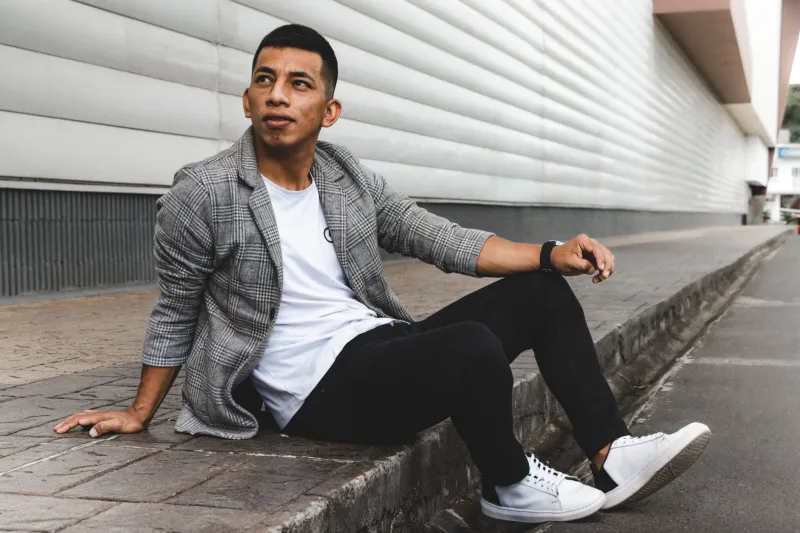
Here's the assignment. For seven days, wear the same uniform: a well-fitted white tee, dark jeans, clean sneakers. Nothing else. No logos, no layers, no accessories beyond a watch.
What you'll notice by day three is how differently the world reads simplicity. Baristas assume you have your life together. Strangers don't clock you as trying too hard — because you aren't trying at all. The white tee is a confidence flex disguised as a non-choice. It says: I don't need the outfit to do the talking.
It's also the ultimate filter. If you look good in a plain white tee and jeans, you'll look good in anything. If you don't, the problem was never the clothes.
Own the era you're in. Sometimes that starts with the simplest shirt you own — worn like it's the most deliberate thing in your closet. Because after this week, it will be.